cInvest (Convoy DWM)
Digital wealth for Hong Kong
cInvest is an online fund supermarket by Convoy Finance Ltd, licensed for Type 1 (Dealing in Securities), Type 4 (Advising on Securities) and Type 9 (Asset Management). The Digital Wealth Management team wanted to understand what their users needed from the service and identify the opportunities worth going after.
Product research on top of market research
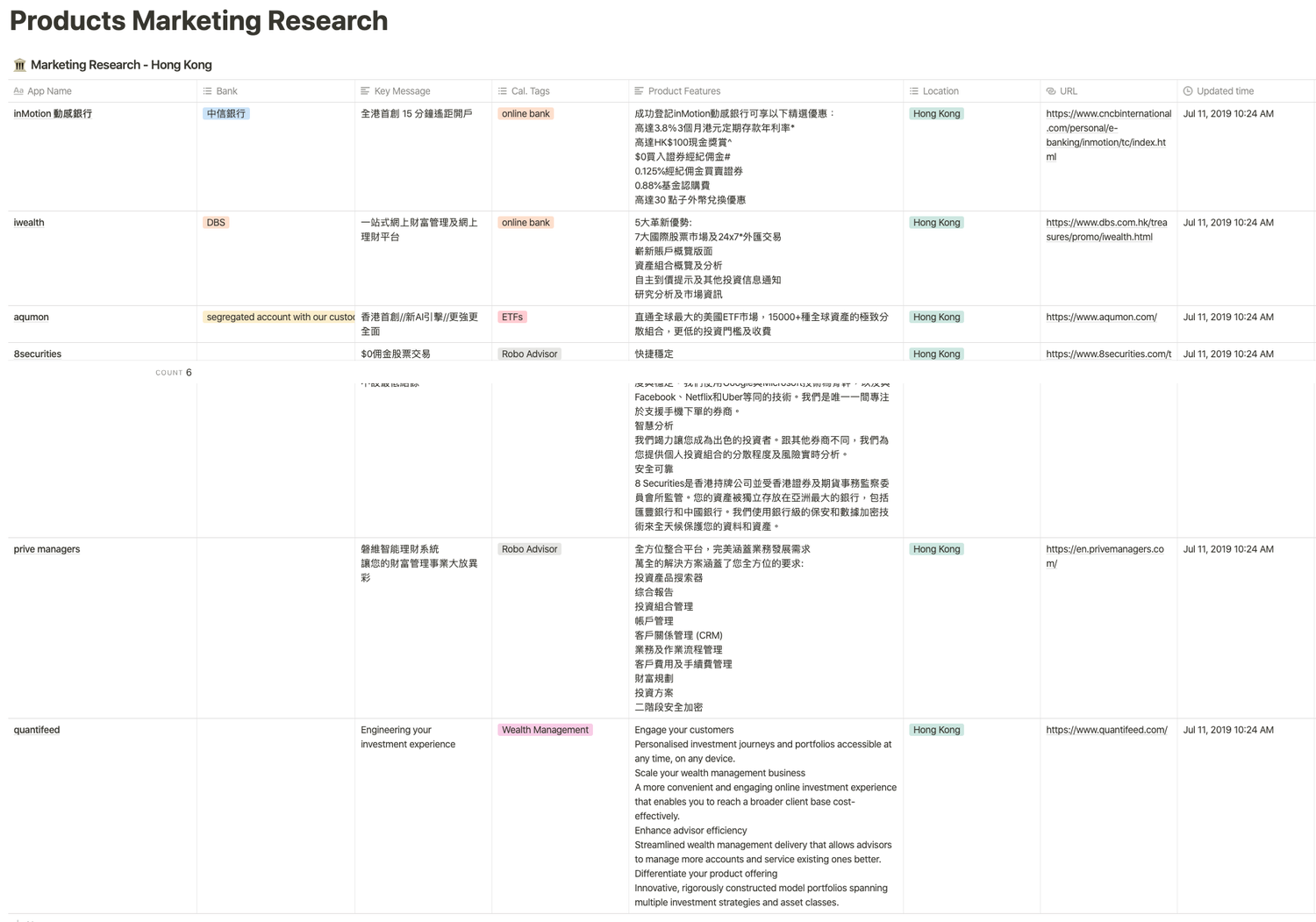
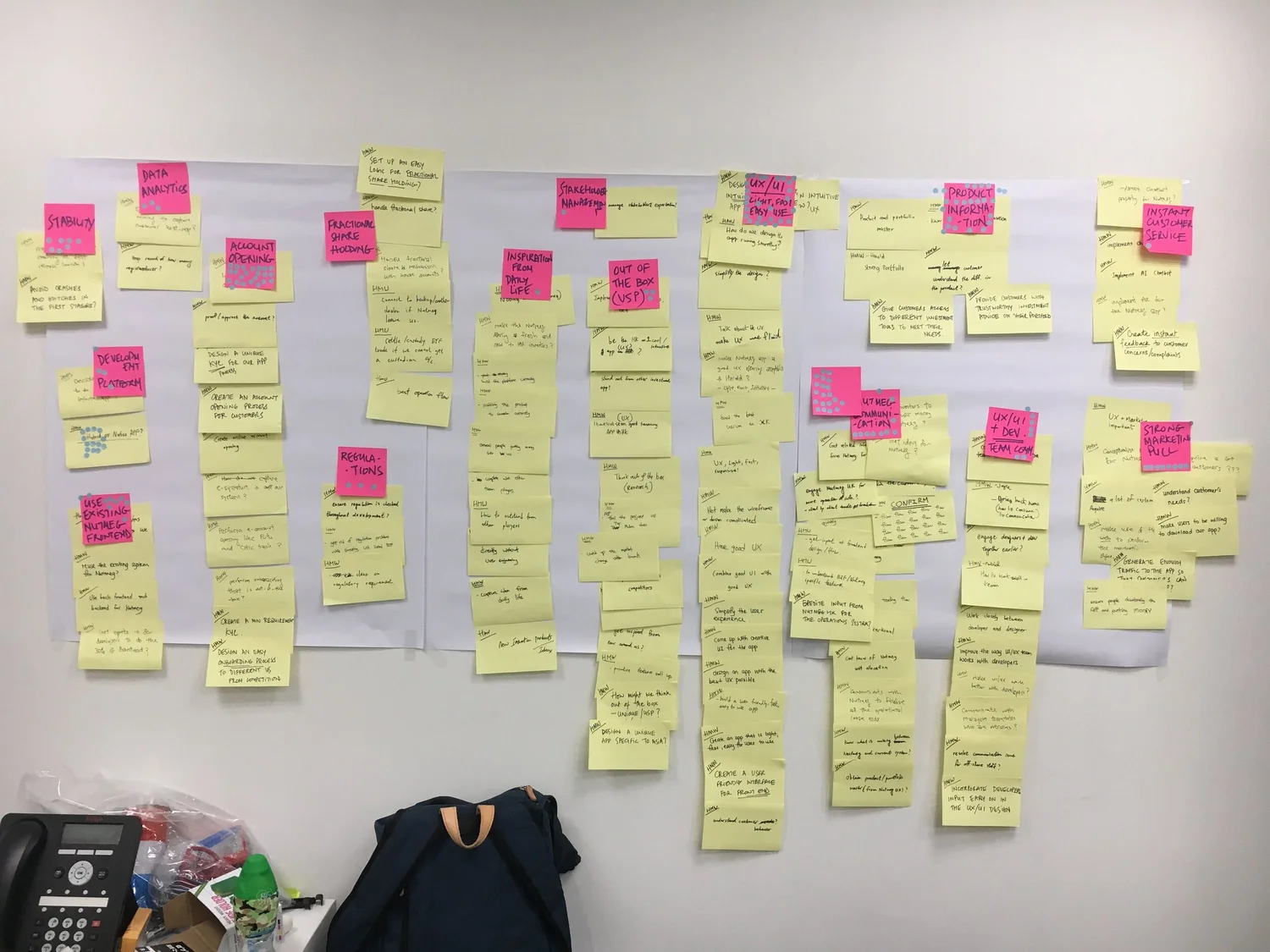
Convoy had commissioned the fundamental market research. On top of that, our team continued deeper product research: feature comparison of direct competitive products, the marketing approach of direct competitors, and a product-regulatory study specific to the Hong Kong market. The goal: get to the specifics behind the macro picture.
Ideal journey, real touchpoints
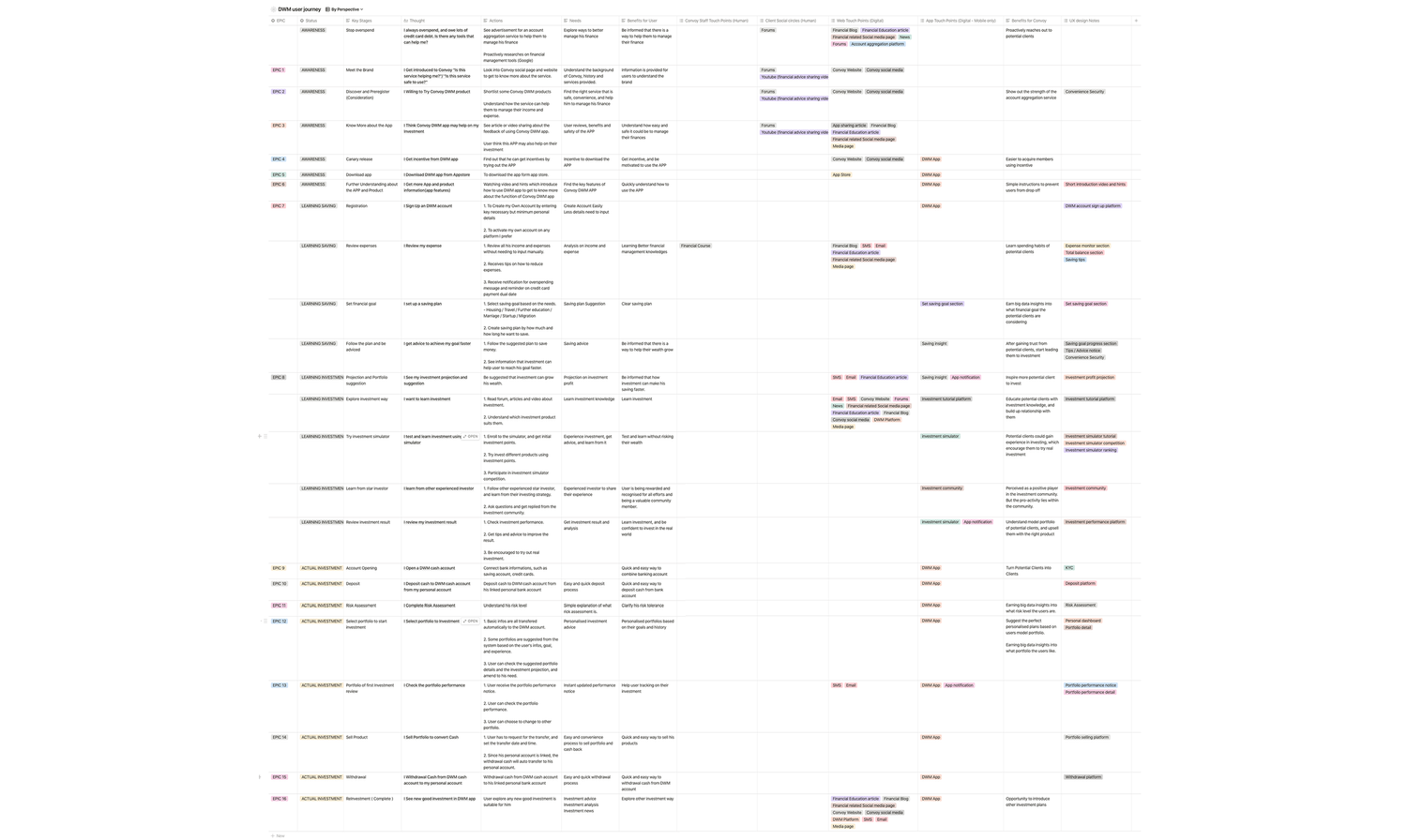
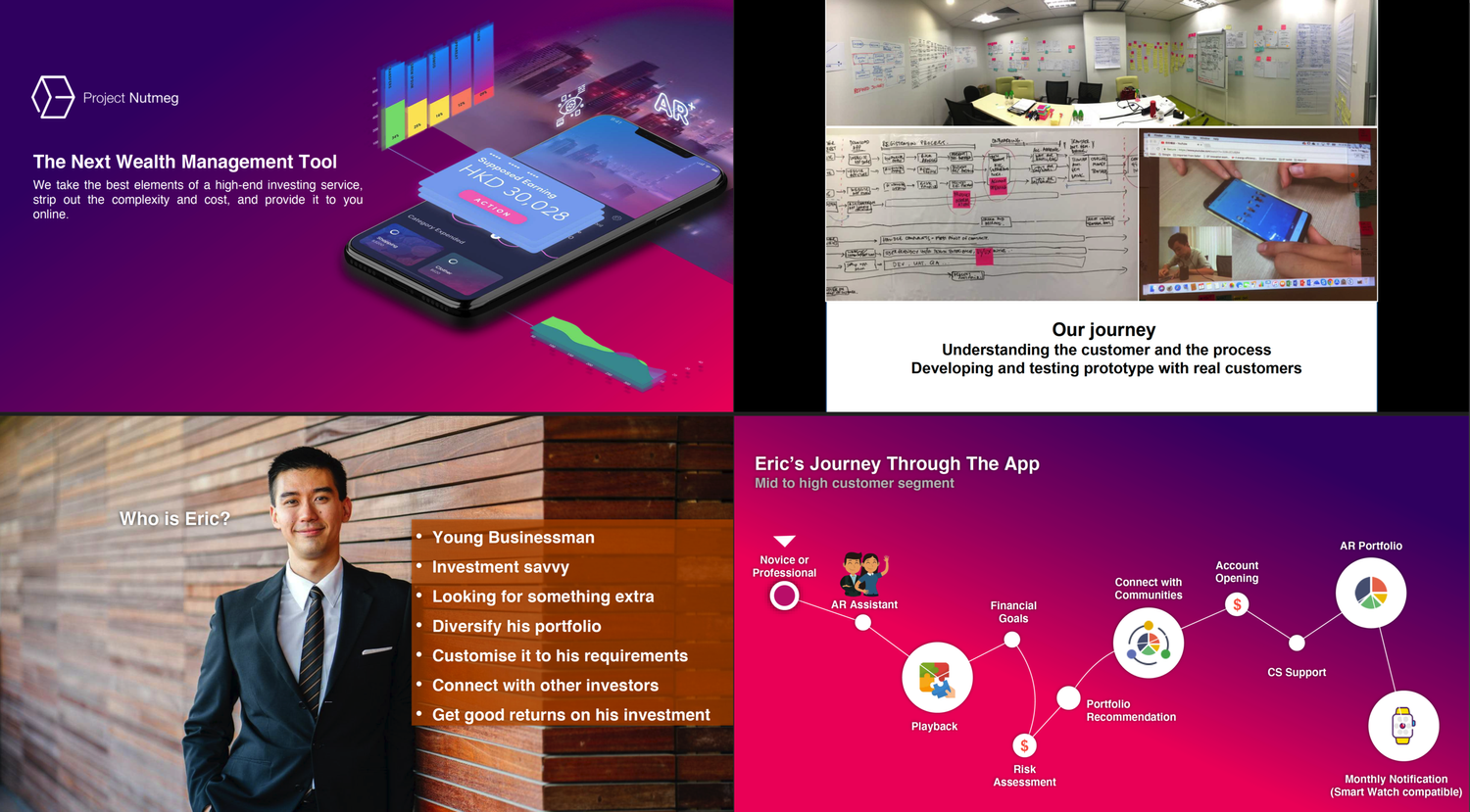
The insights from research fed a User Journey Map: thoughts, actions, needs and benefits of the user at each stage, stacked against every internal touchpoint that served that stage.
Creating a journey map as a deliverable helps both the product team and the business see the bigger picture. It lets us focus based on research, and it helped every internal stakeholder understand where they fit into the experience.
Define product scope with user flows
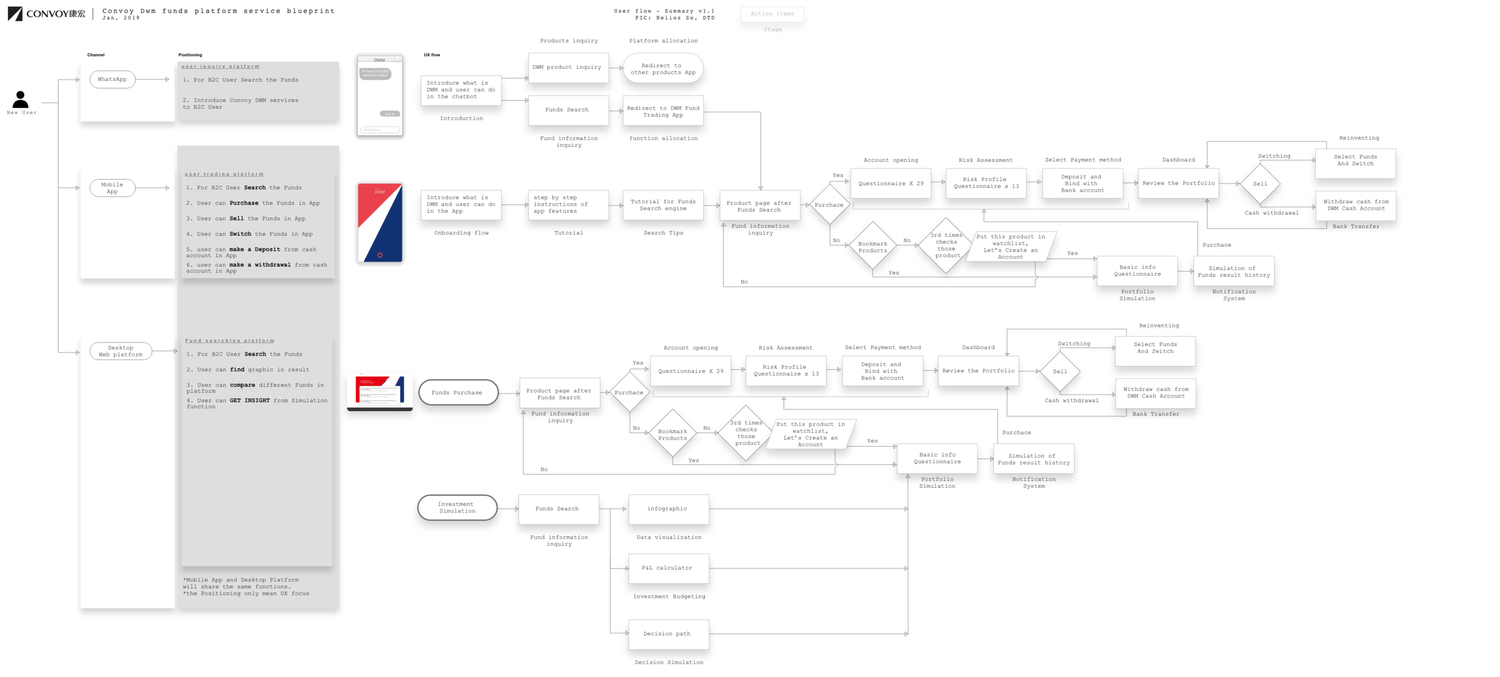
User flows forced the team to think through every consideration that might affect design decisions. Walking every step of a flow together meant no requirement, detail or interaction got forgotten. Even better: the diagram projected the final product’s shape, cutting down errors and iteration count right from the start.
Storyboard before pixels
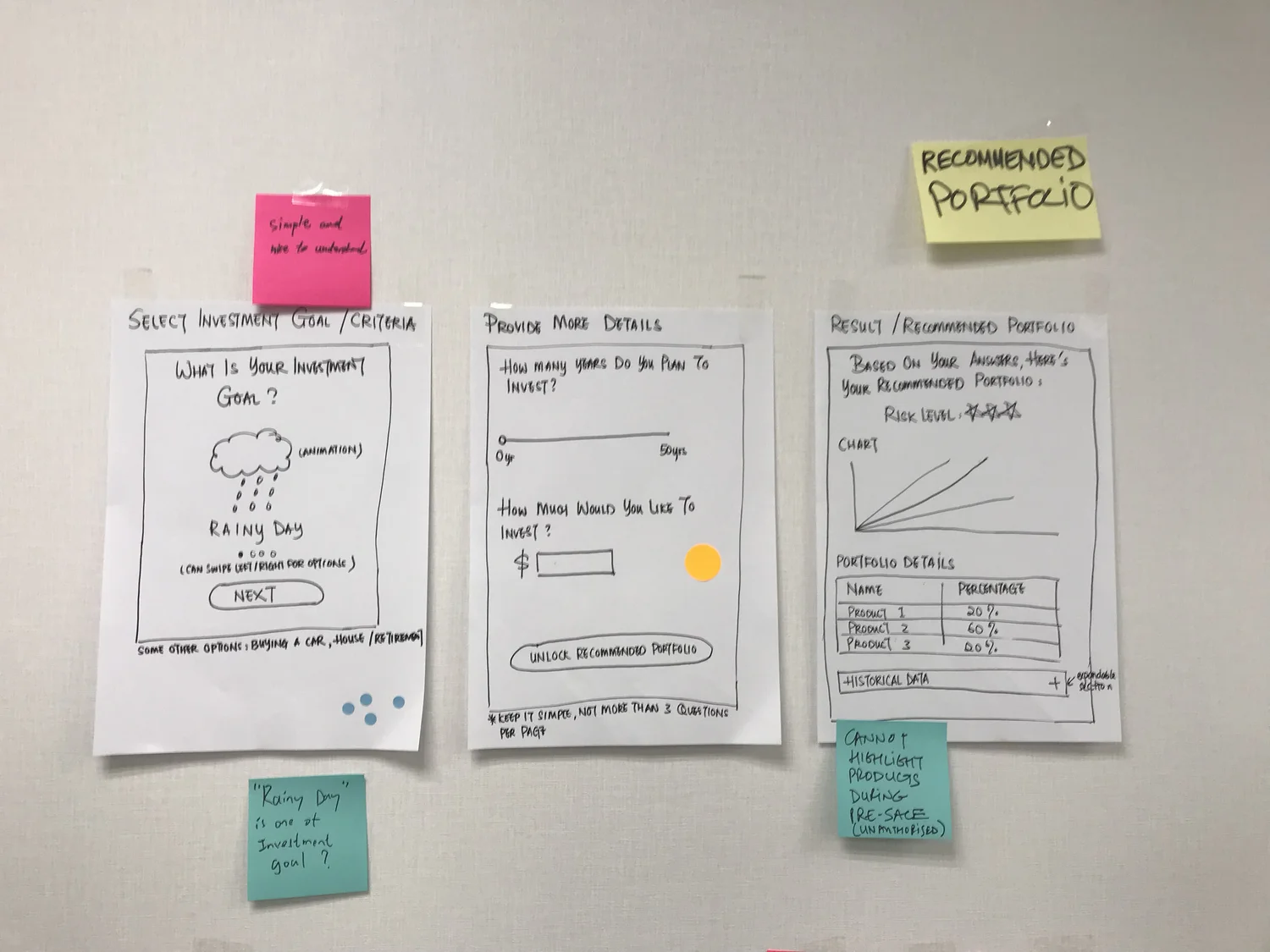
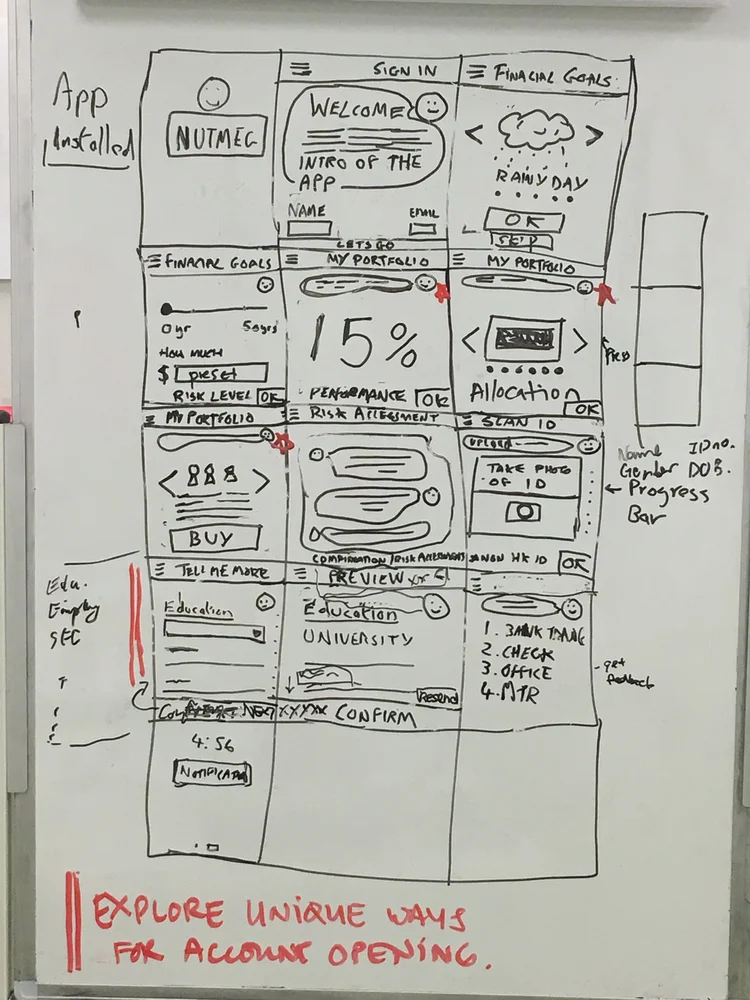
Storyboarded the core interactions before pushing pixels. The storyboard sits between flow and prototype — it lets the team agree on interaction beats and content structure before anyone commits to visual decisions.
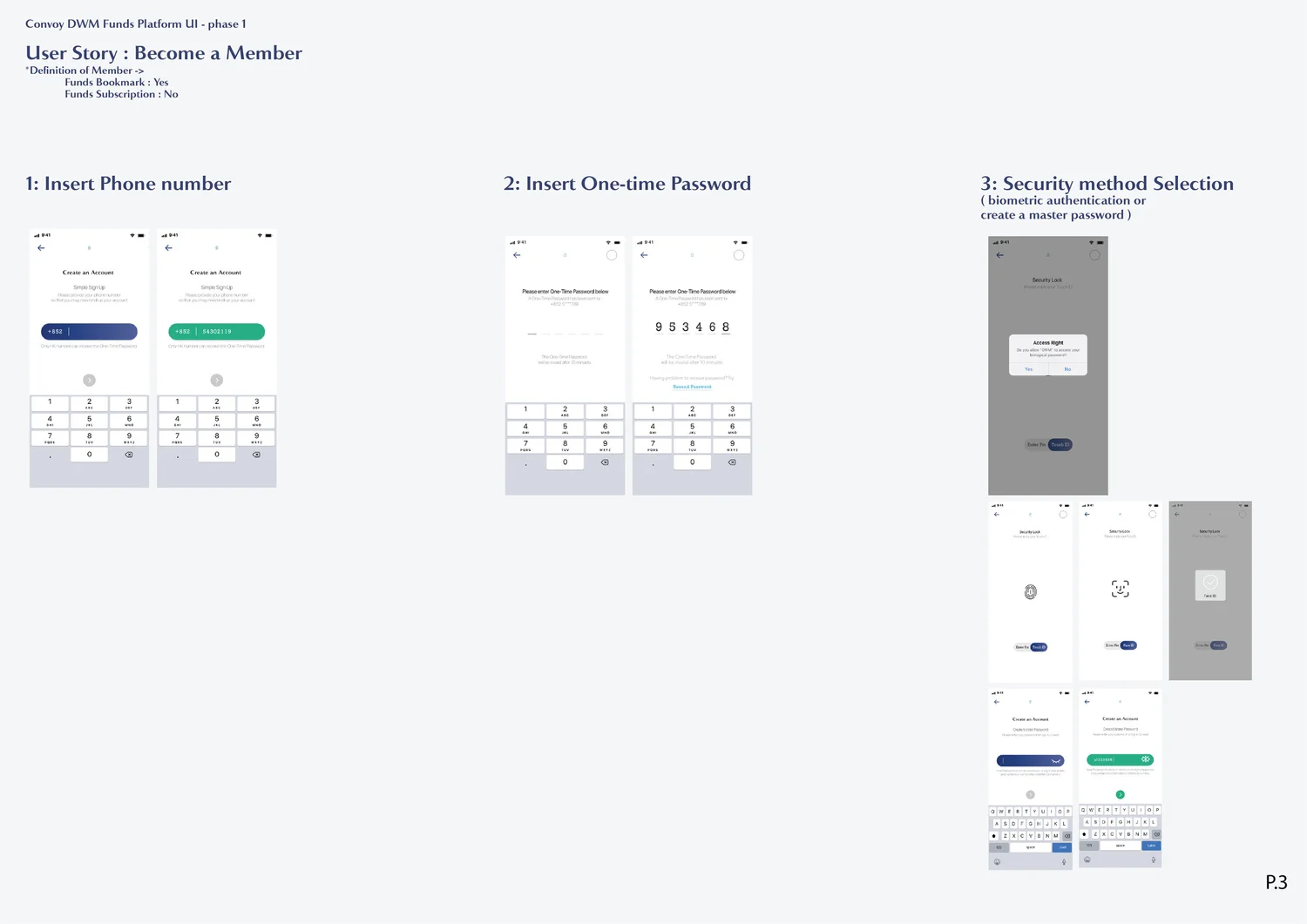
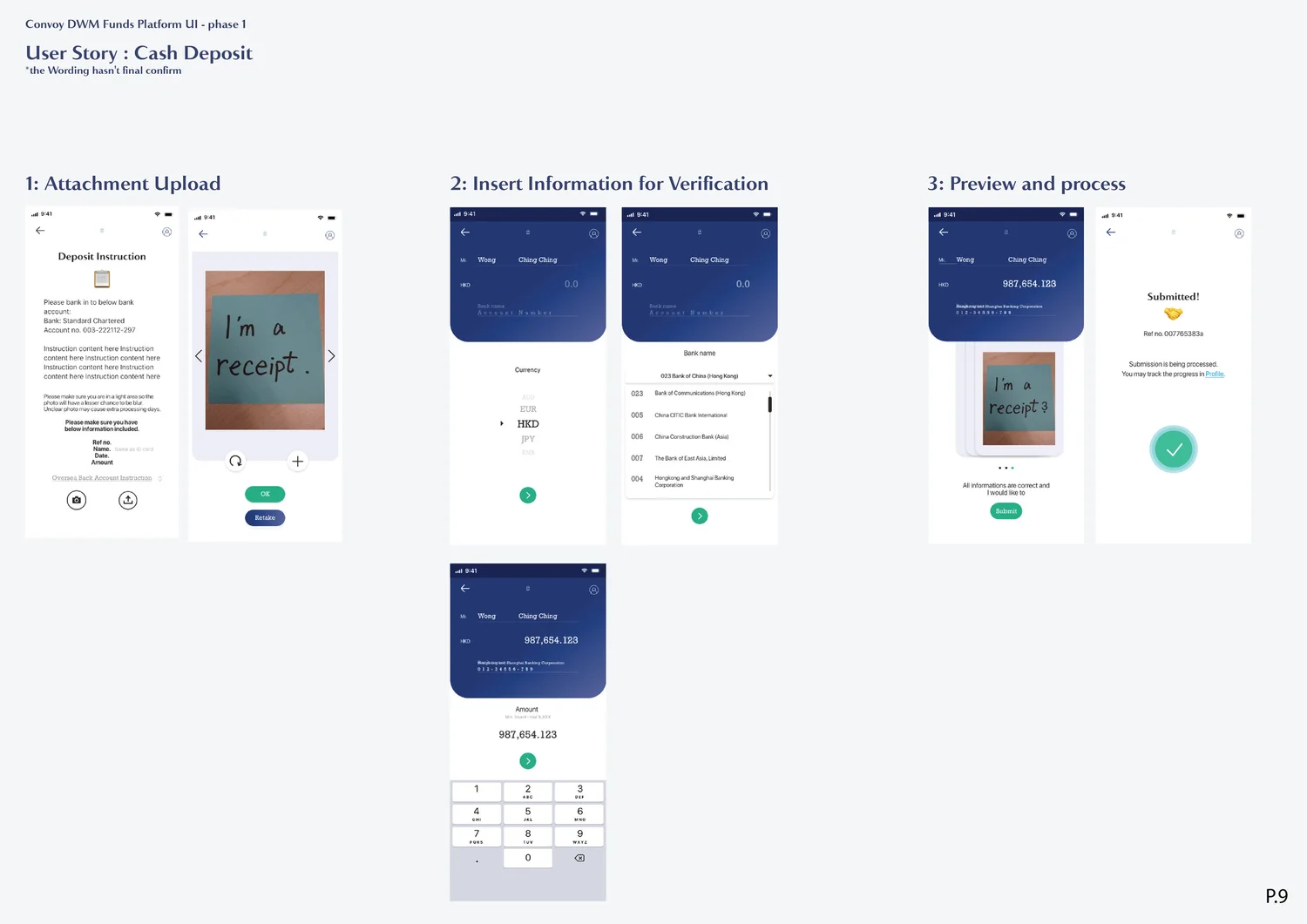
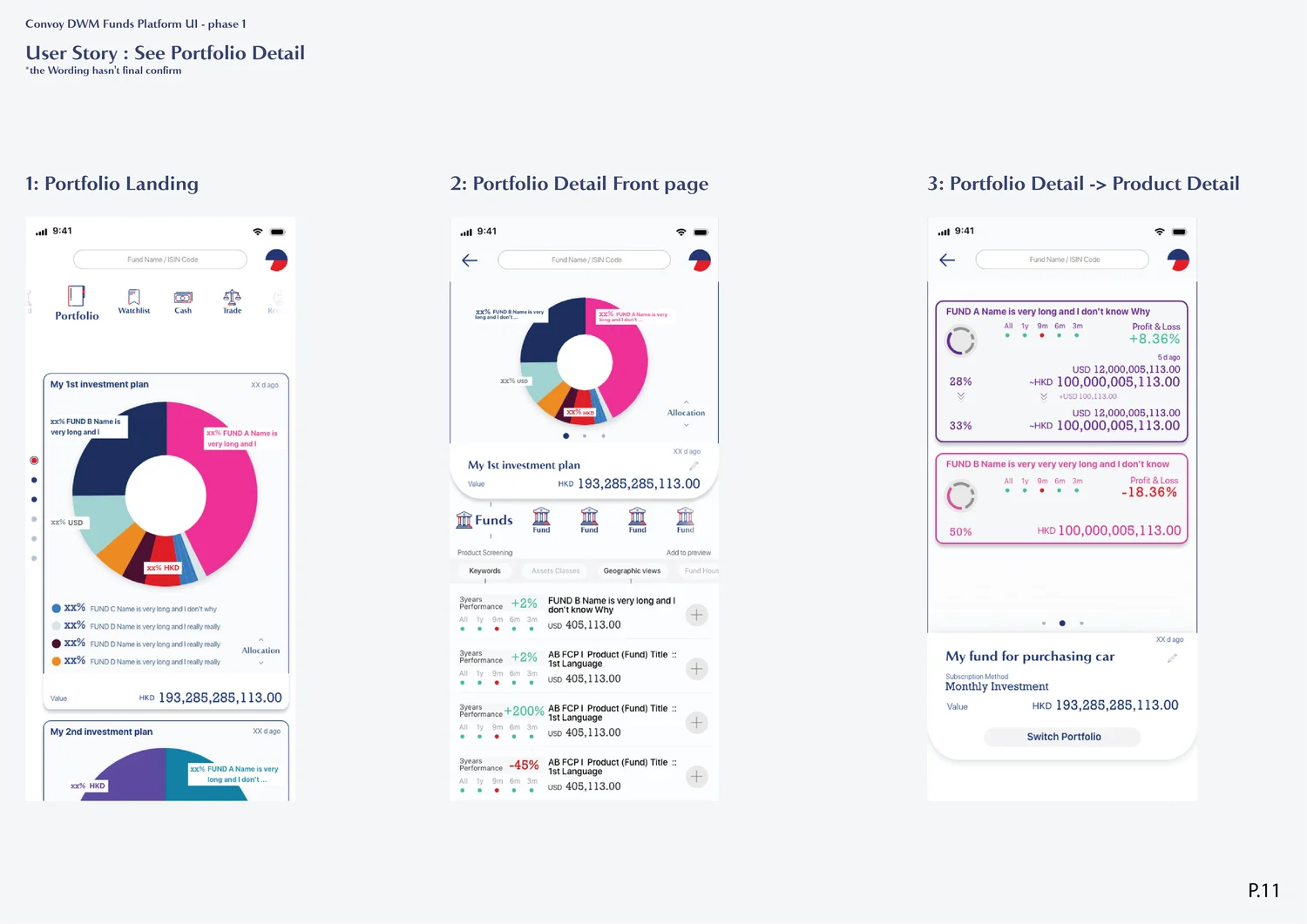
Prototype with user stories
After defining the requirements, the flow showed the product’s structure like a blueprint; the prototype showed its first full-scale, functional form. Prototypes reduced development time by giving engineers a concrete target, gave stakeholders visuals to react to, and — most important — let the team weed out approaches that didn’t work before they cost real build time.
A Lego kit for the whole app
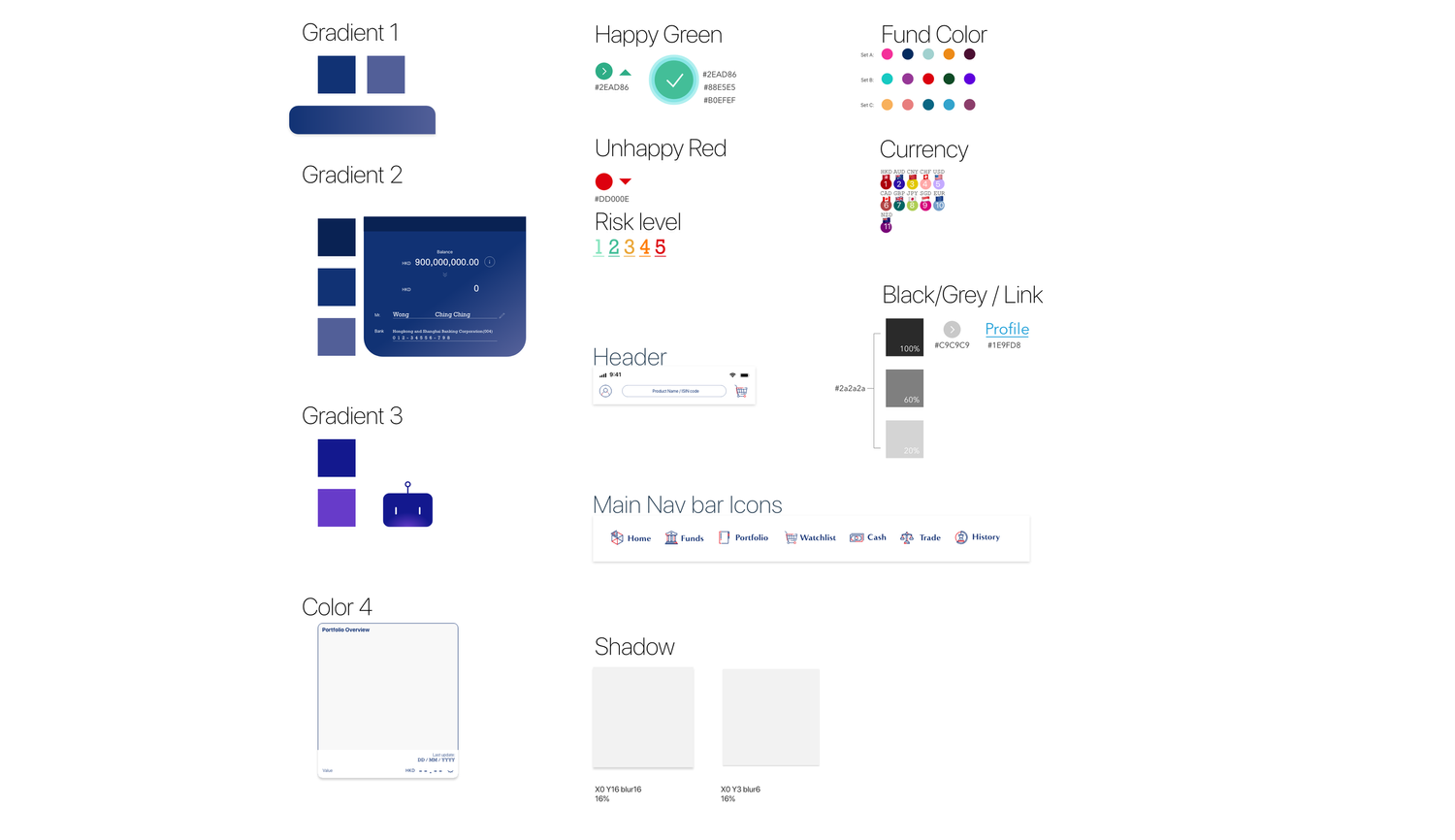
For cInvest to stay extensible, it needed a design system. Standards for design and code, unifying both practices — the same instructions and Lego kit for everyone. Benefits: faster development, consistent layout, and reduced variance in user experience as more surfaces shipped.