ConvoyHelp
The evolution of looking for information
Unlike a mobile app or a static website, the most dynamic web surfaces hold enormous amounts of information. A decade ago, “search” meant matching keywords from an input box to text indexed in a database.
As the internet matured, search became an attempt to understand the intent of users so the results would be much more relevant. ConvoyHelp’s portal was a huge content surface that needed to cross that line — from keyword-match to intent-aware.
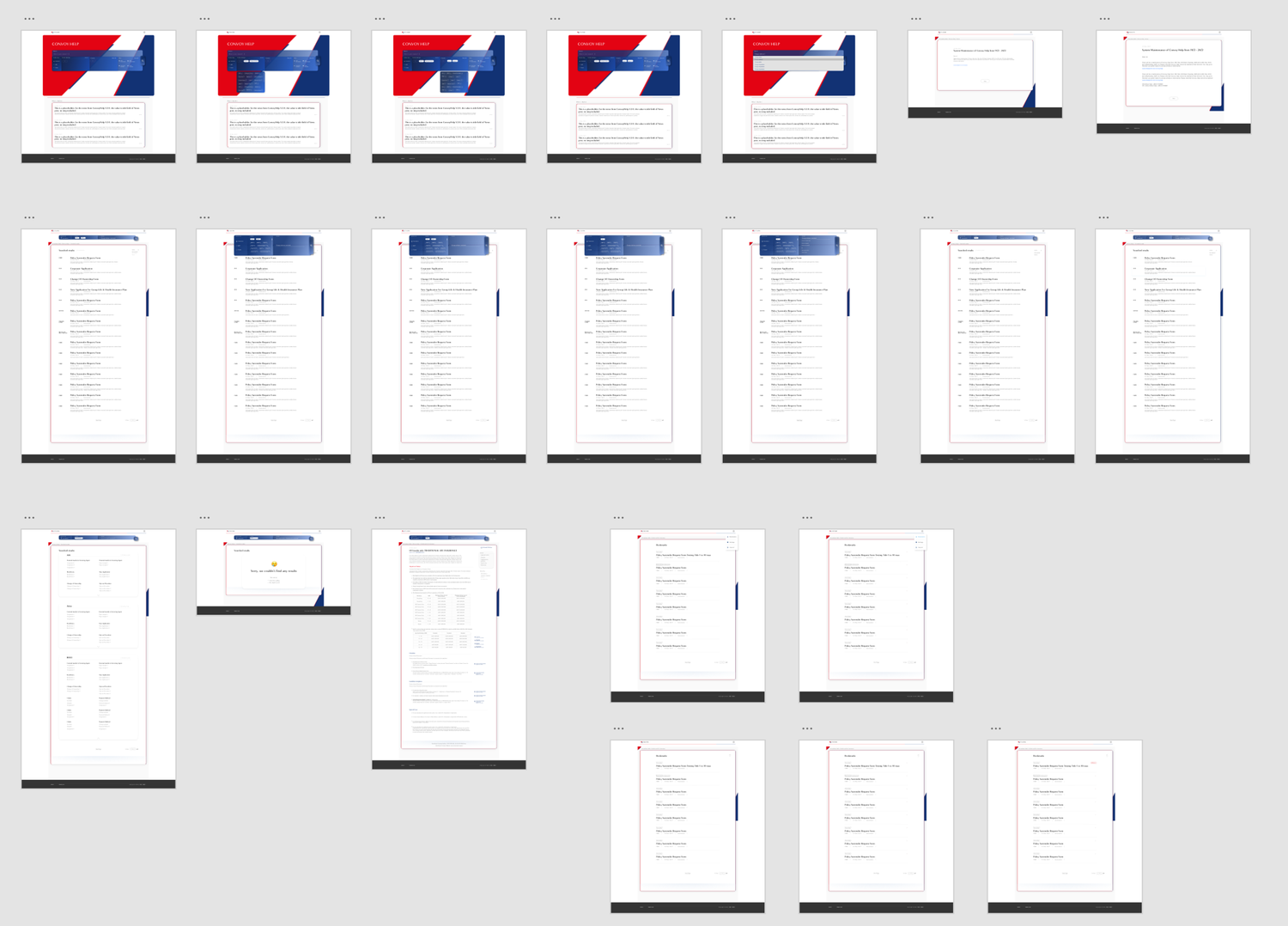
Landing of ConvoyHelp
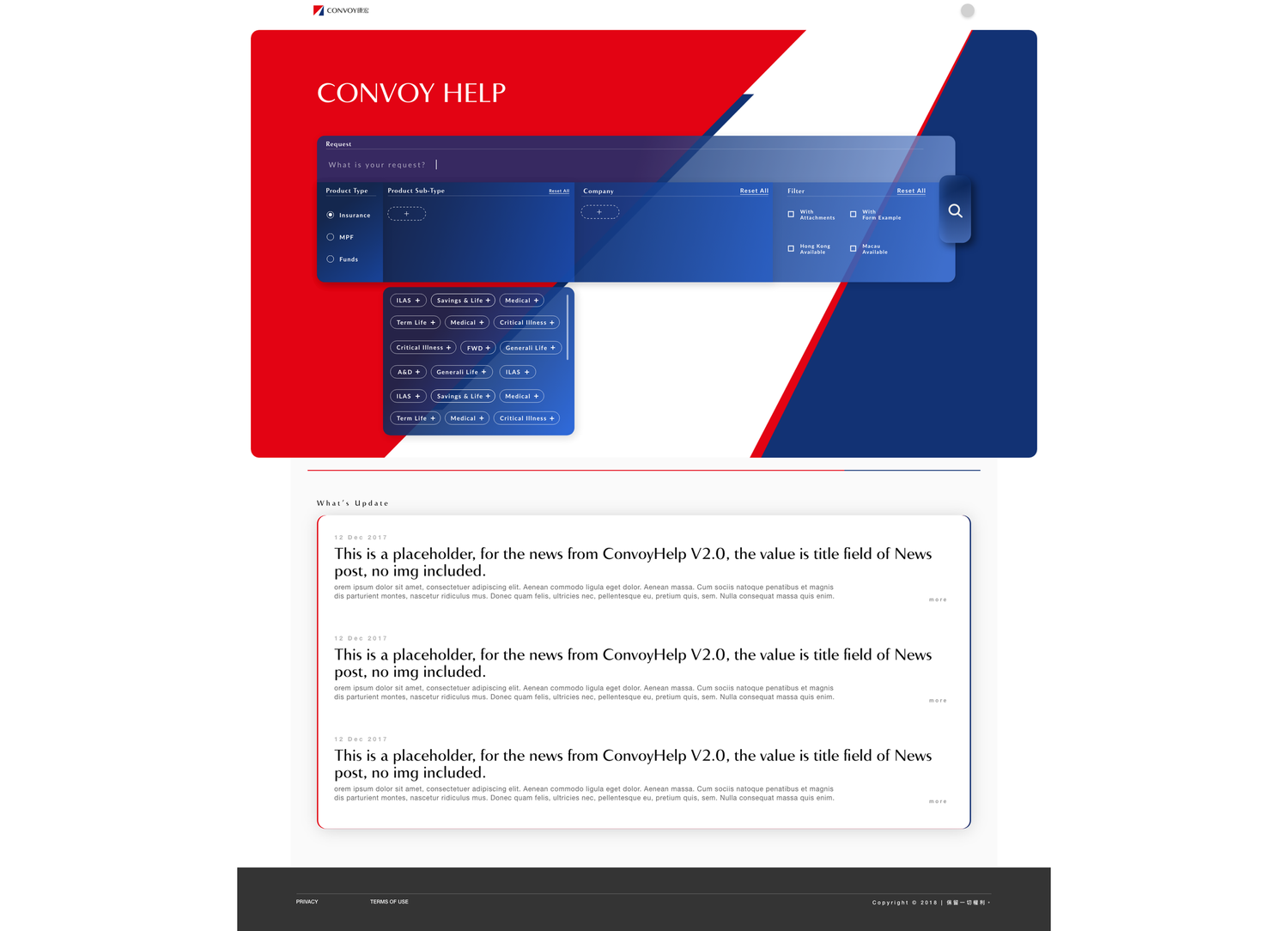
Designed the landing surface as the front door to the whole information portal. It needed to hint at the breadth of content inside, invite the right query, and make the intent-aware search feel present — not hidden.
Search flow focused on range, not path
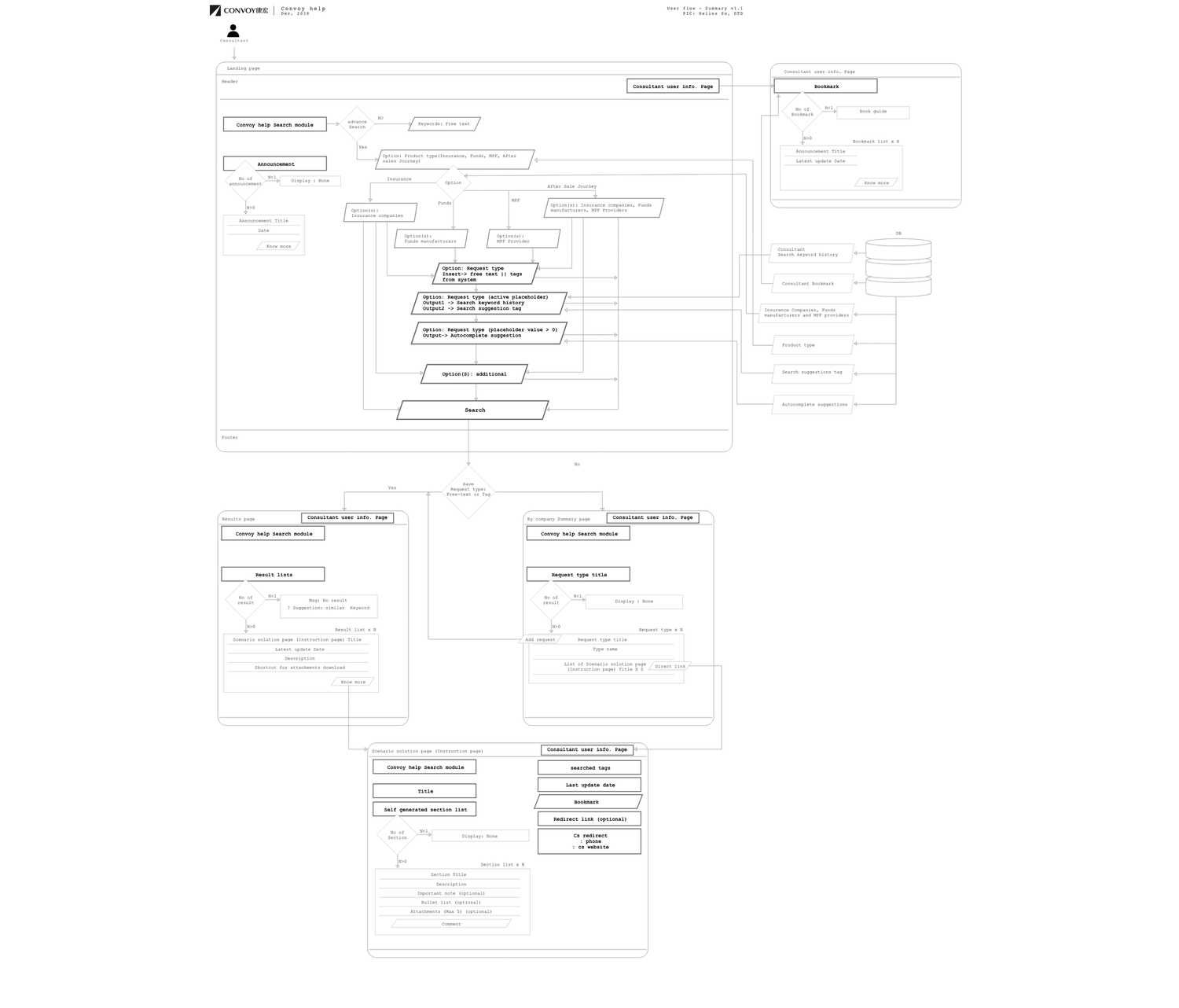
The difference between a mobile-app user flow and a search-engine user flow is what they optimise for. App flows optimise for product structure — walking the user through every step. Search flows optimise for the range of information and how the user narrows it. To help users understand the data structure underneath, options and filters guided them toward clarifying their intent as they searched.
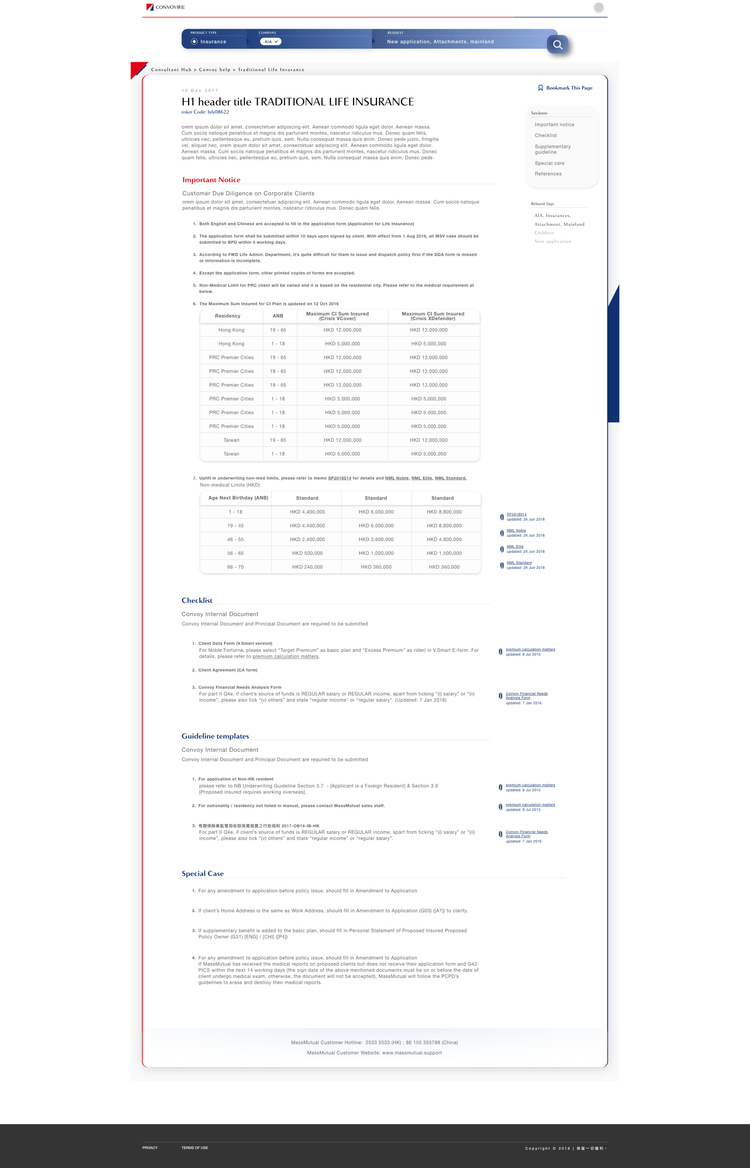
Result page UI
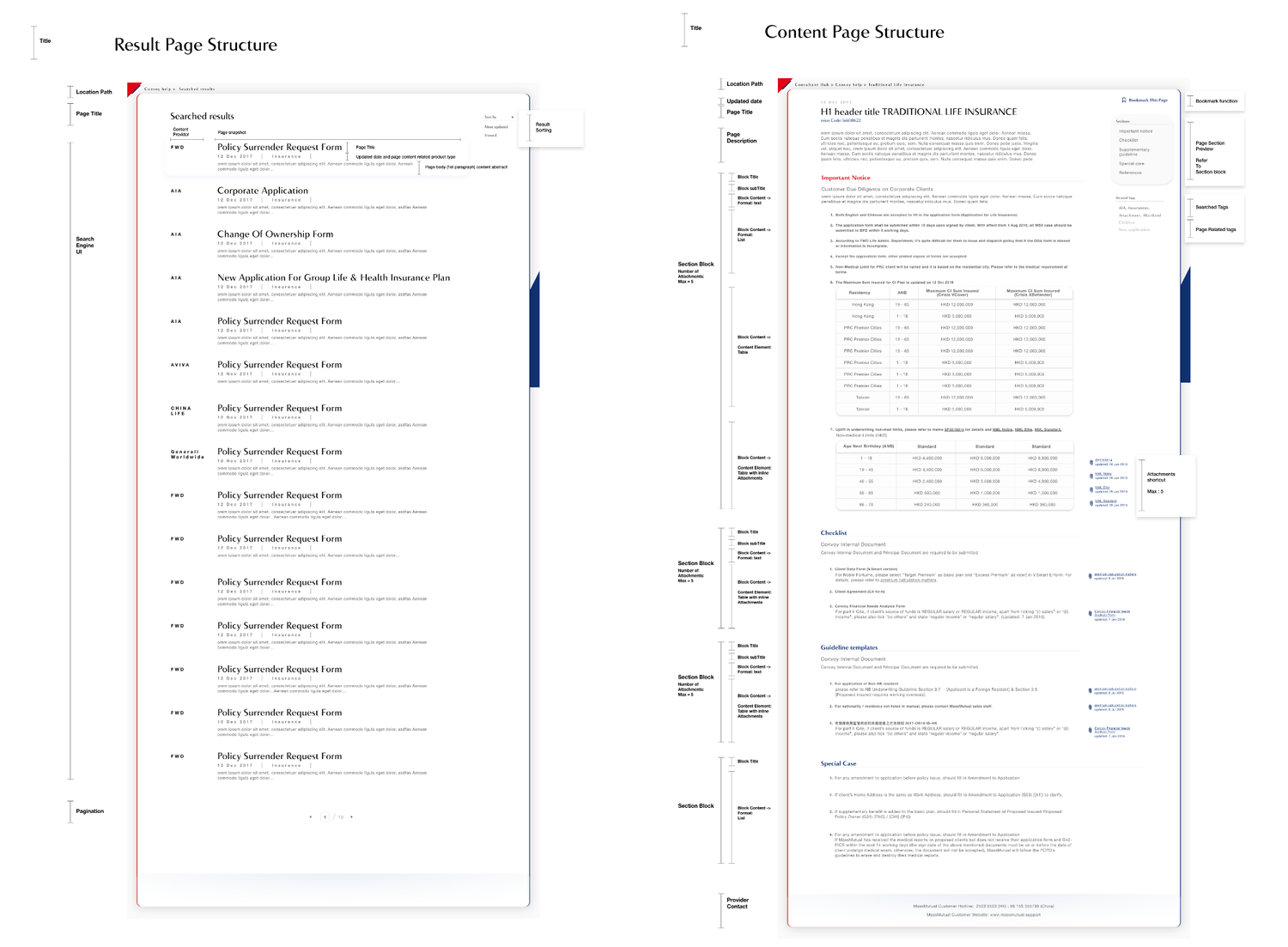
Designed the result page for scannability across heterogeneous content types — articles, FAQs, product pages, support threads. Each result type has its own affordances and visual density; the grid had to make that legible without shouting.
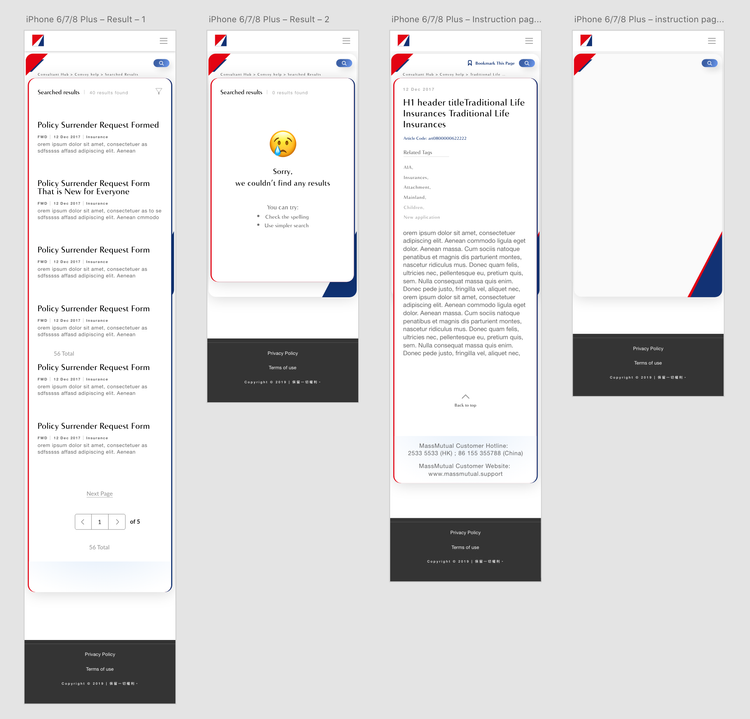
Bookmarks for returning users
Many users return to the same references. Bookmarks let them pin sources and skip the search when they know what they need. A small addition that compounded significantly for power users and internal staff.
A roll-out plan for the content team
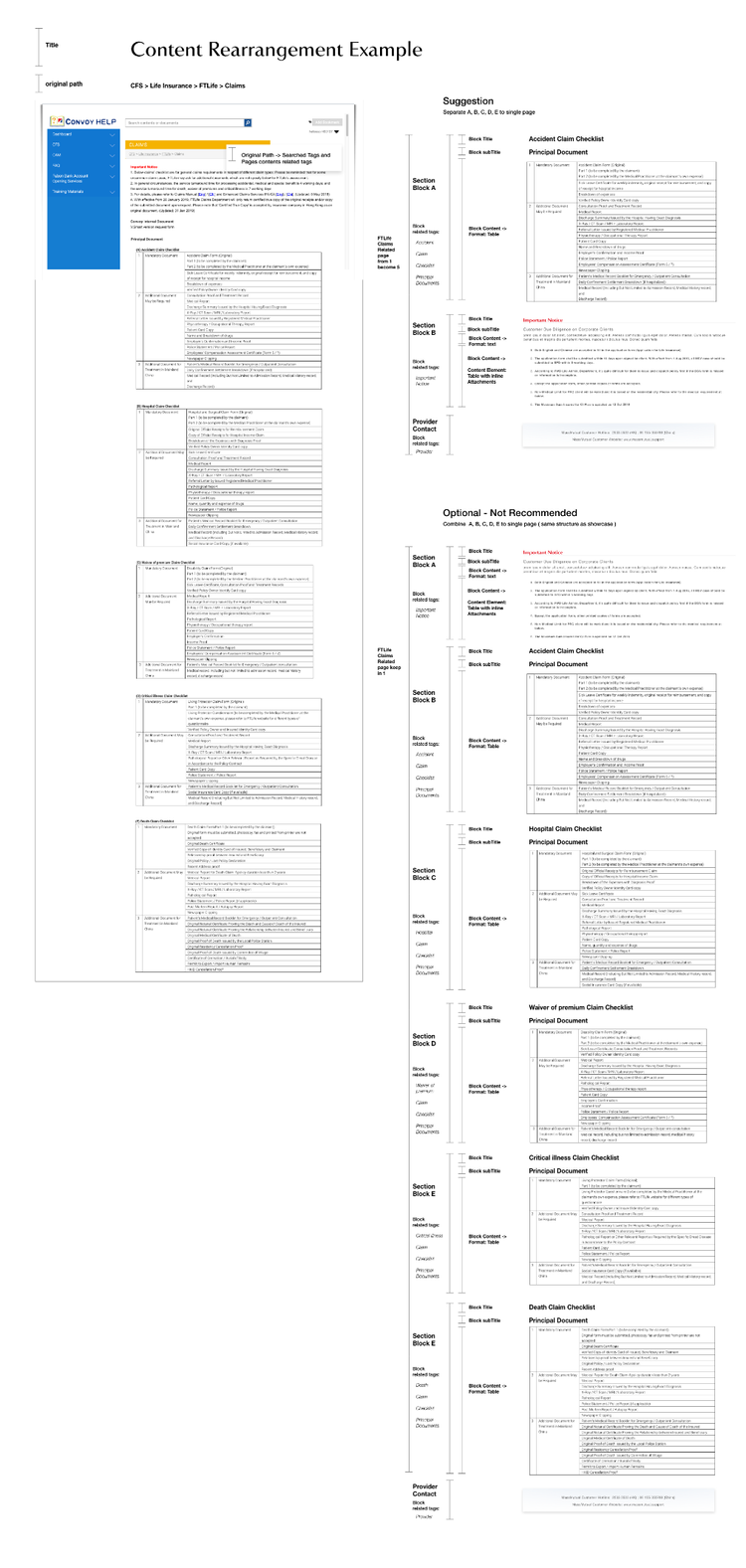
Internal staff were responsible for the content behind the portal. The roll-out plan doubled as a communication tool — the most efficient way to bring the team onto the new system, explain the intent-aware search model, and establish how they’d contribute to the knowledge base going forward.