Hightable
Two AI agents, one repo, one prompt surface
AI-augmented coding means juggling multiple CLI agents. Claude Code, Codex CLI, and others each live in their own terminal — no shared repo context, no way to compare responses, and no safe path to orchestrate them against each other.
Hightable is a local desktop workbench that runs both side-by-side from a single prompt surface, with a small set of opinionated orchestration patterns wrapped around them.
One repo, one topic, two terminals
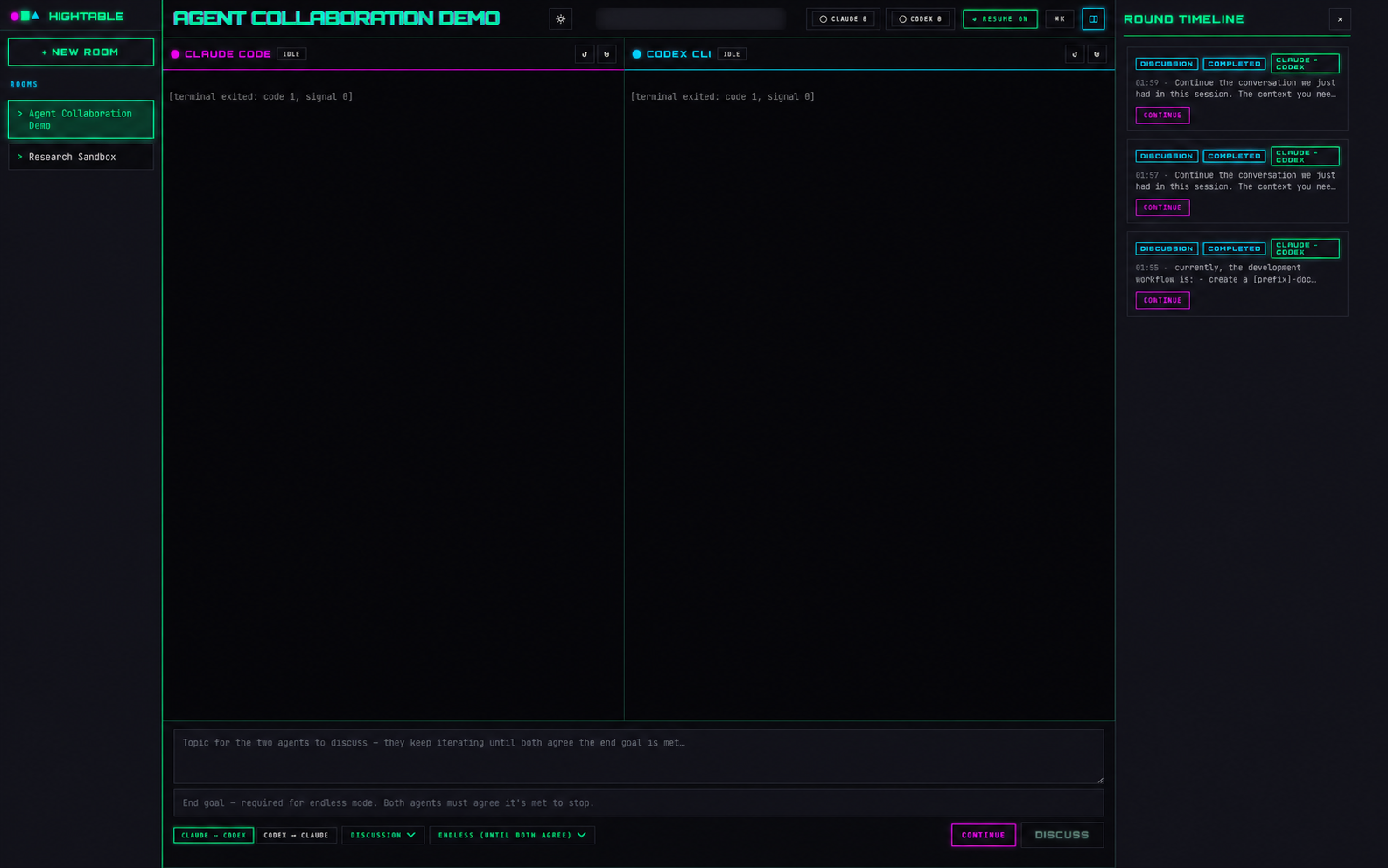
Each room binds a repo and a topic to two persistent terminal sessions — Claude Code on the left, Codex CLI on the right — plus a shared prompt surface and a Round Timeline that records every exchange.
Switch rooms and the agents pick up where the conversation left off, with the right working directory and the right context. No more manually re-prompting two terminals to catch up.
Three modes, one decision-maker
Primary / reviewer — one agent leads, the other audits. Parallel same-prompt — both agents see the same prompt, you pick the better answer. Capped discussion rounds — they debate within a hard ceiling, then I close the loop.
The point isn’t "let agents loop forever." The point is to put their answers next to each other so a human picks the direction every round. The Round Timeline keeps every choice auditable.
Light theme, same orchestration
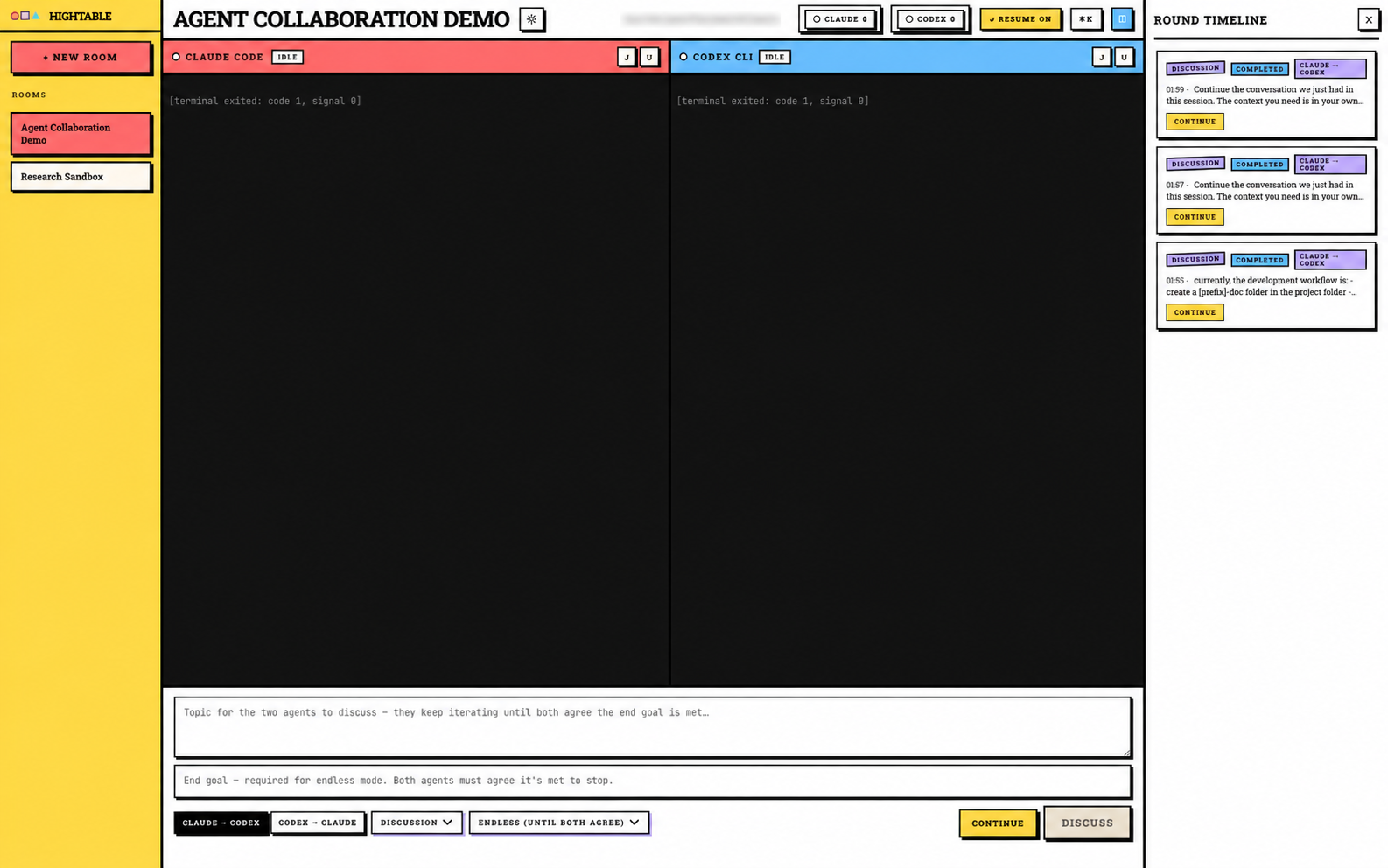
A second palette to keep the room readable in any environment — not the feature, but the kind of detail that signals the tool is meant to be lived in, not demoed once.
No cloud, no telemetry
Uses each CLI’s existing auth, stores transcripts in local SQLite, no network calls outside the model providers themselves. Read-only defaults; worktree isolation; the system never prompts a terminal that’s mid-task.
MVP wired end-to-end
Electron + React 19 + TypeScript on the renderer; xterm and node-pty for real terminal sessions; better-sqlite3 for transcripts. Full test suite passing on the MVP. Public on GitHub.